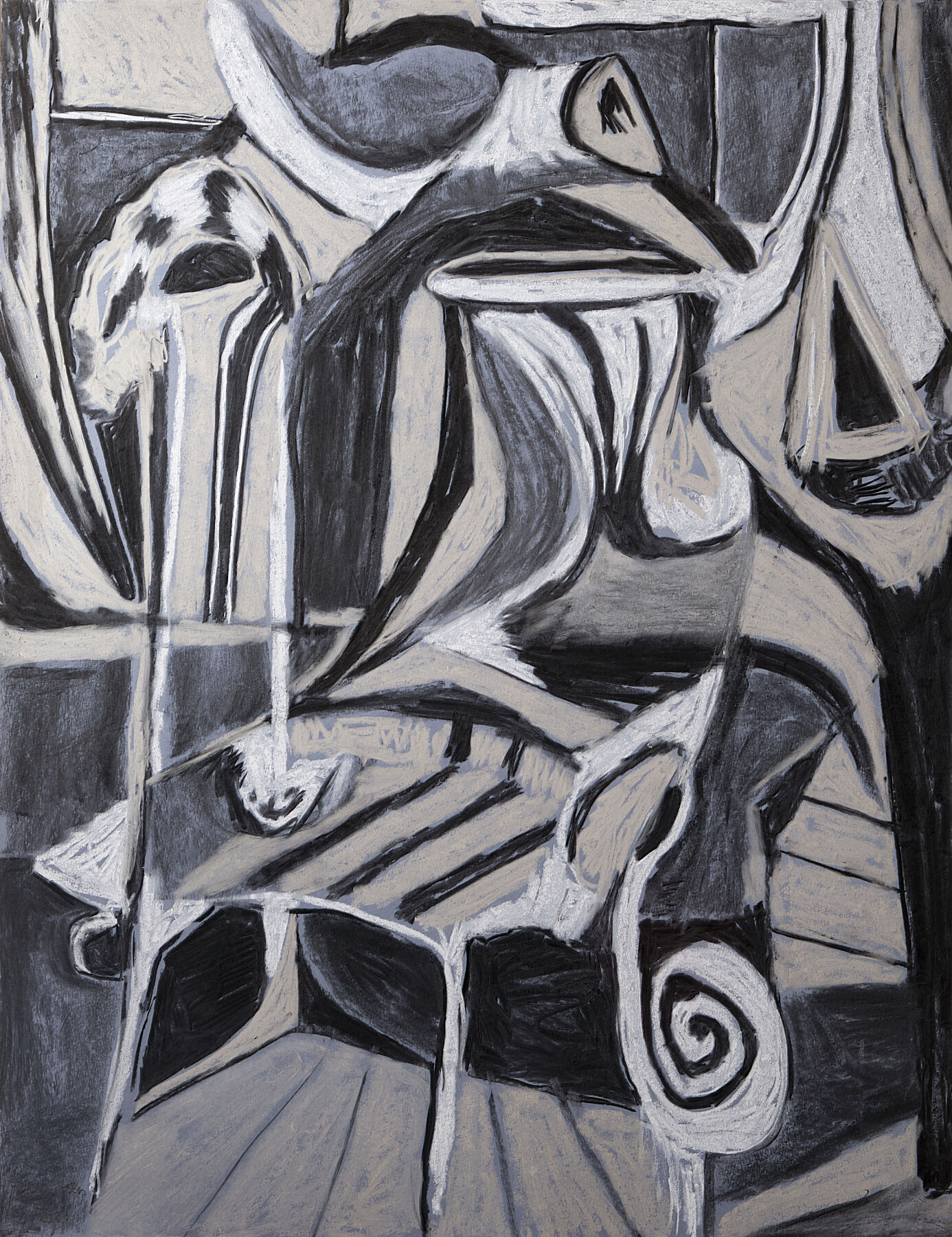
Looking back, I think what moved me most as a child was abstract art. I had a poster of Kandinsky above my bed, and one from the exhibition El Futurismo. Works by Lissitzky and Kurt Schwitters taught me that feeling and reason go very well together when you experience art. The emotion I felt while looking at these abstract collages and paintings was one of wonder and awe.
n one of the most progressive galleries in Enschede, Gallerie Beeld en Aanbeeld, abstract painters were often on display. My parents took me along and I could lose myself in the compositions, colours and extraordinary worlds I saw. The works were a challenge, and sparked my love for art. The indescribable, the mystery, an eternal pursuit of the unknown.
A few years later I enrolled at the art academy, where I encountered many ideas about art. The academy encouraged me to explore all kinds of things, to reflect on the work, to see connections, and to engage in self-examination. It was a wonderful time filled with experimentation.
After graduating, I thought about my place in art and how my work related to society. The story behind the work became important. What was it about, what did it engage with, how did it relate to other art? I wrote many questions and stories about my own work.
Now, some 30 years after graduating, I have returned to abstract work. My first love. And I am beginning to let go of the whole narrative around the artwork. I don't want to hear any more fuss about it. The work is nothing more and nothing less than who I am. It is not complicated, and it is what it is. No references to people, politics, sexuality, death, or other classic themes in art.
Right now I simply want to let my abstract drawings be themselves. To respect them and support them without questions but with trust — the way you give your children trust as they develop, without imposing your own opinion.
Each drawing has its own character, and I want to judge that as little as possible. They exist, and that in itself is already quite remarkable.